Data Science from Yesterday to Tomorrow
Lessons from a Quarter-Century of Hype and Reality
Recep Erol, PhD
Computational Scientist for AI · Curator & Founder of awesome-datascience
About the Speaker

Recep Erol, PhD
Computational Scientist for AI
🏛️ Center for Research Computing (CRC) — Rice University
⭐ Creator & Curator of academic/awesome-datascience (30k+ Stars)
The Central Thesis
What Changes Constantly
- Framework churn (Weka → Hadoop → Spark → PyTorch → LangChain)
- Hype cycles & executive buzzwords
- SaaS vendor stacks and specialized APIs
What Never Changes
- Mathematical rigor & probability theory
- Causal reasoning and metric integrity
- Translating raw data into human decision-making
The 5 Episodes of Modern Data Science
A 25-year structural progression from server logs to autonomous agents
Telemetry Era
Web 2.0 logs, clickstreams, data mining & pattern recognition.
The HBR Boom
Social graphs, "Sexiest Job", open source communities.
Industrialization
CRISP-DM lifecycle, predictive algorithms & retail analytics.
The Edge Wall
Autonomous driving, edge cases & the synthetic data pivot.
Foundation Era
LLMs, title splintering & first-principles resurgence.
The Death of Static Brochureware
Web 1.0 (Pre-2000)
- Static HTML pages uploaded manually via FTP.
- Read-only documents with no state persistence.
- Server load was low; logs were deleted or ignored.
- Zero insight into real-time user intent.
Web 2.0 (2000–2007)
- Dynamic, database-backed web applications.
- User sessions, logins, shopping carts & comments.
- Granular HTTP access logs & clickstream events.
- Every click, dwell time, and bounce became permanent data.
The Boardroom Awakening
Where are users dropping out before checkout? Redesigning UI based on click sequences.
Moving from static display banners to behavioral pay-per-click relevance.
Understanding search intent and item affinity across product catalogs.
From Data Mining to Pattern Recognition
Before the phrase "Data Science" was popularized, practitioners were labeled Data Miners or Pattern Recognition Specialists.
The Academic Roots
- Association rule mining (Apriori, FP-Growth)
- Markov chains for web page navigation order
- Clustering algorithms (K-Means, Hierarchical)
The Database Bottleneck
- Relational databases (RDBMS) buckled under semi-structured log volumes.
- Analytical queries locked transactional production tables.
- The necessity for distributed storage was born.
The Social Graph & Personalization
When data stopped being just transactional and became psychological
The Social Explosion
- Facebook, Twitter, YouTube generated interconnected user graphs.
- Text, sentiment, likes, and shares created rich feature embeddings.
- Recommender systems exploded (Collaborative Filtering, Matrix Factorization).
The Rise of Big Data
- The open-source release of Apache Hadoop (MapReduce + HDFS).
- Commodity hardware clusters replaced multimillion-dollar mainframes.
- The race was on to hire people who could write distributed analytical code.
"The Sexiest Job of the 21st Century"
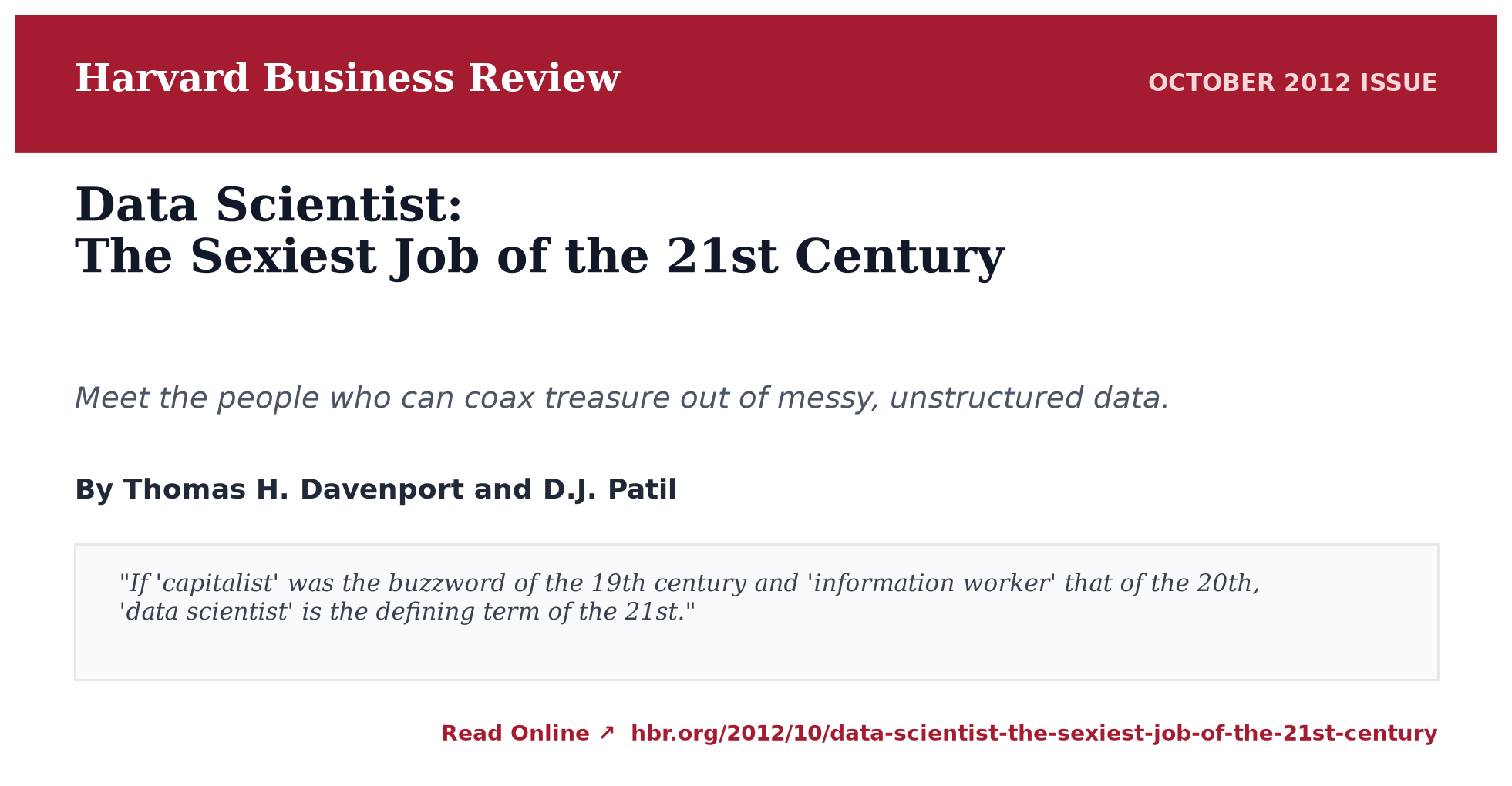
- Authored by Thomas H. Davenport & D.J. Patil.
- Elevated data practitioners from backroom server racks to C-suite agendas.
- Triggered billions in investment for distributed analytical tooling & bootcamps.
The "Unicorn" Venn Diagram Myth
                       ┌──────────────────────────────────────────────┐
                       │          The 2012 Unicorn Expectation        │
                       │                                              │
                       │       [ Math & Statistics ]                  │
                       │                 ▲                            │
                       │                 │  "The Data                 │
                       │                 ▼   Scientist"               │
                       │  [ Hacking / CS ] ◄───► [ Domain Expertise ] │
                       └──────────────────────────────────────────────┘
The Open Source Awakening: awesome-datascience
Created in 2014 by Recep Erol when resources were locked behind paywalls or dense textbooks.
- Evolved into the globally recognized open-source index for curated Data Science roadmaps.
- Contributors from Silicon Valley, Berlin, Tokyo, and Bangalore.
- Proved that the global hunger for foundational, first-principles data literacy was universal.
The Industrialization Reckoning
The 2015 Reality Check
- 80% of enterprise models never made it to production.
- Notebook code suffered from hidden state and lack of reproducibility.
- Data drift, training-serving skew, and silent failures ruined trust.
The Professional Solution
- Formalization of the Data Science Lifecycle (CRISP-DM modernized).
- Git version control for data, models, and code (MLflow, DVC).
- The dawn of MLOps as an engineering discipline.
The Formal Data Science Lifecycle
┌──────────────┐     ┌──────────────┐     ┌──────────────┐     ┌──────────────┐
│  1. Business │ ──► │  2. Data     │ ──► │  3. Feature  │ ──► │  4. Model    │
│  Objective   │     │  Wrangling   │     │  Engineering │     │  Validation  │
└──────────────┘     └──────────────┘     └──────────────┘     └──────┬───────┘
                                                                      │
                     ┌──────────────┐     ┌──────────────┐            ▼
                     │  6. Monitor  │ ◄── │  5. CI/CD    │ ◄──────────┘
                     │  & Feedback  │     │  Deployment  │
                     └──────────────┘     └──────────────┘
Data Science shifted from an isolated experimental craft to an end-to-end software engineering discipline.
Predictive Machine Learning Boom
The Goal
Moving past *describing* historical patterns to *predicting* future events with calibrated probabilities.
The Toolset
Scikit-learn, XGBoost, LightGBM, and Random Forests become standard enterprise table-stakes.
Early Automation
Customer service bots, churn prediction models, and dynamic pricing engines deploy at scale.
Case Study: The Target Pregnancy Predictor
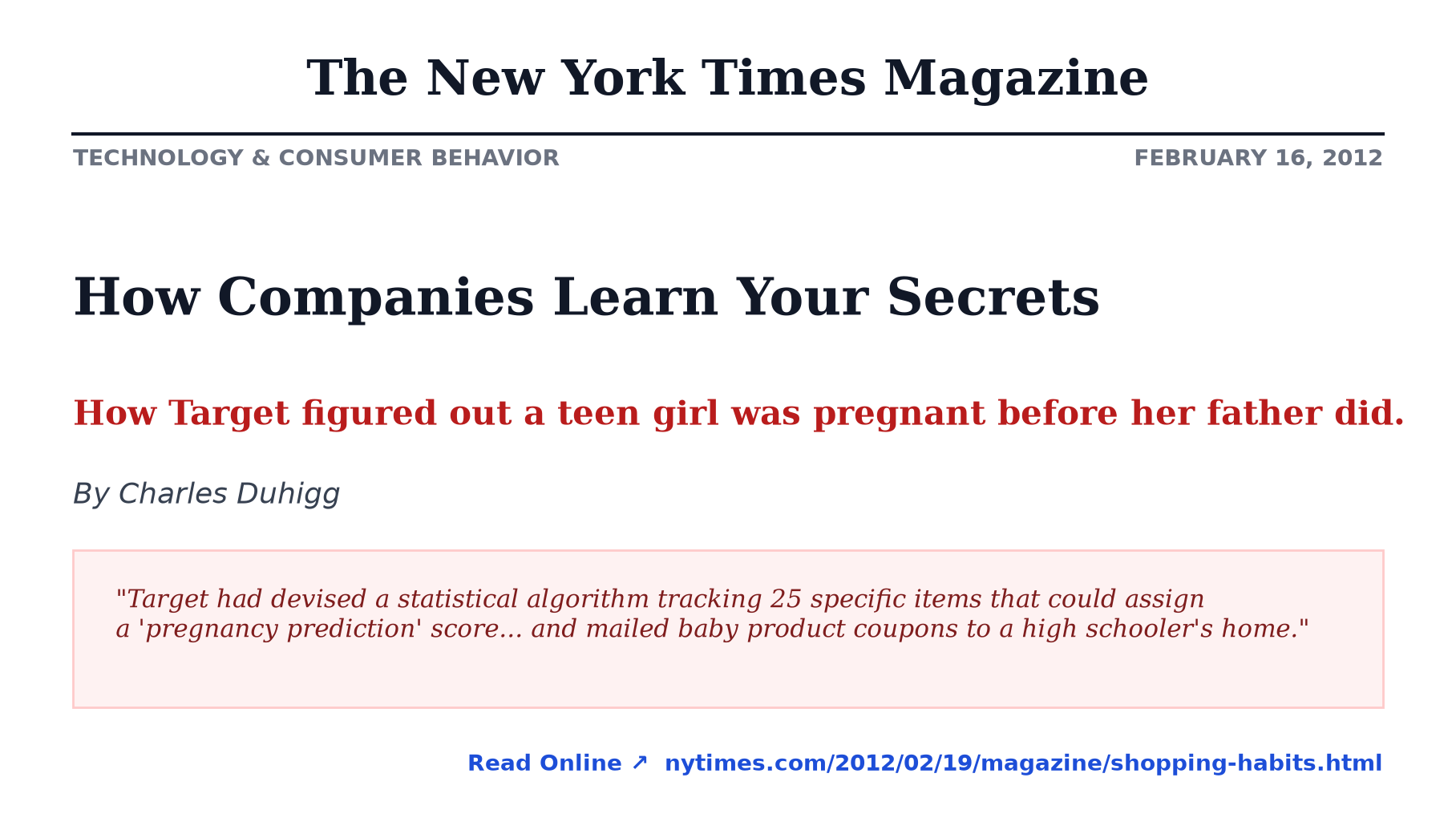
Predictive Power meets Ethical Governance
- Investigated by Charles Duhigg in The New York Times Magazine.
- Target tracked 25 specific items (unscented lotion, magnesium, cotton balls).
- Calculated pregnancy confidence scores and mailed coupons to a high schooler.
- Sparked the global debate on algorithmic boundaries, consumer privacy, and GDPR.
The Crucible of Autonomous Systems
Multi-Sensor Fusion
Merging real-time streams from LiDAR, high-res cameras, and Radar at 10–100 Hz.
Edge Latency
Inference must happen in <10 milliseconds on vehicle embedded silicon without cloud dependency.
Zero Tolerance
Unlike a movie recommendation, a single false negative can have catastrophic physical consequences.
The Curse of the Long Tail
A model trained on 10 million miles in sunny Phoenix, Arizona will frequently fail when encountering a sudden whiteout blizzard in Montreal or a mattress fallen on a highway.
The Physical Limitation
Collecting every rare physical edge case in the real world is physically, temporally, and financially impossible. Real-world empirical data hits a plateau.
The Solution
Instead of relying strictly on collecting more physical data, use existing data distributions to synthesize novel conditions.
From Collection to Synthetic Generation
[Real-World Data Collection] ──► [The Long-Tail Plateau] ──► [Domain Shift Failure]
                                                                     │
                                                                     ▼
[Generative AI / Simulation] ──► [Synthetic Edge Cases]  ──► [Robust Foundation Models]
Synthetic Simulation
Simulate fog, rain, glare, and obstacles that rarely occur in real life, training models on millions of synthetic variations.
The Foundation Paradigm
This conceptual shift directly paved the road for Generative AI: learning the generative distribution rather than just classifying.
The Foundation Model Inversion
How Generative AI fundamentally inverted the data stack
Traditional ML (Discriminative)
- Goal: Given an input $X$, predict label $Y$ ($P(Y|X)$).
- Heavily task-specific: one model for sentiment, one for fraud, one for churn.
- Fragile to out-of-distribution shifts.
Foundation Models (Generative)
- Goal: Model the full data distribution $P(X)$.
- Generalist capabilities across text, vision, code, and reasoning.
- Enables zero-shot and few-shot task adaptation without retraining.
The Great Title Splintering
| Role | Core Focus | Primary Toolset |
|---|---|---|
| Data Analyst | Business metrics, storytelling, exploratory dashboards | SQL, Tableau, DuckDB, Python |
| Data Engineer | Distributed pipelines, data lakehouses, reliability | Spark, dbt, Kafka, Snowflake |
| ML Engineer | Latency, model serving, CI/CD, feature stores | PyTorch, Triton, Kubeflow, Ray |
| AI / Agent Engineer | LLM orchestration, RAG, prompt tuning, tooling | LangChain, vLLM, Vector DBs |
| Data Scientist | Causal inference, experimental design, statistical ML | SciPy, Statsmodels, Scikit-Learn |
25 Years of Framework Churn
2002 Era
- Perl scripts
- MySQL raw queries
- Weka GUI
- CSV flat files
2014 Era
- Hadoop MapReduce
- Apache Spark RDDs
- Theano / Caffe
- HBase / Hive
2026 Era
- PyTorch & Transformers
- Lakehouse architectures
- Vector indexes & RAG
- Autonomous AI Agents
Three Immutable Truths for Career Longevity
First Principles
Linear algebra, probability, loss functions, and causal reasoning never go obsolete. If you master the math, learning a new tool takes days.
Domain Context
Data has no intrinsic meaning without domain context. A simple model guided by deep physical or business intuition beats a 1T parameter net applied blindly.
Dynamic Systems
Treat data as a continuous living system, not a static artifact. Always bridge the gap between telemetry and actionable human decisions.
Day 2 Preview: Formula 1 Telemetry Simulation
Applying first principles to high-performance motorsport telemetry
Lab 1: Physics Generator
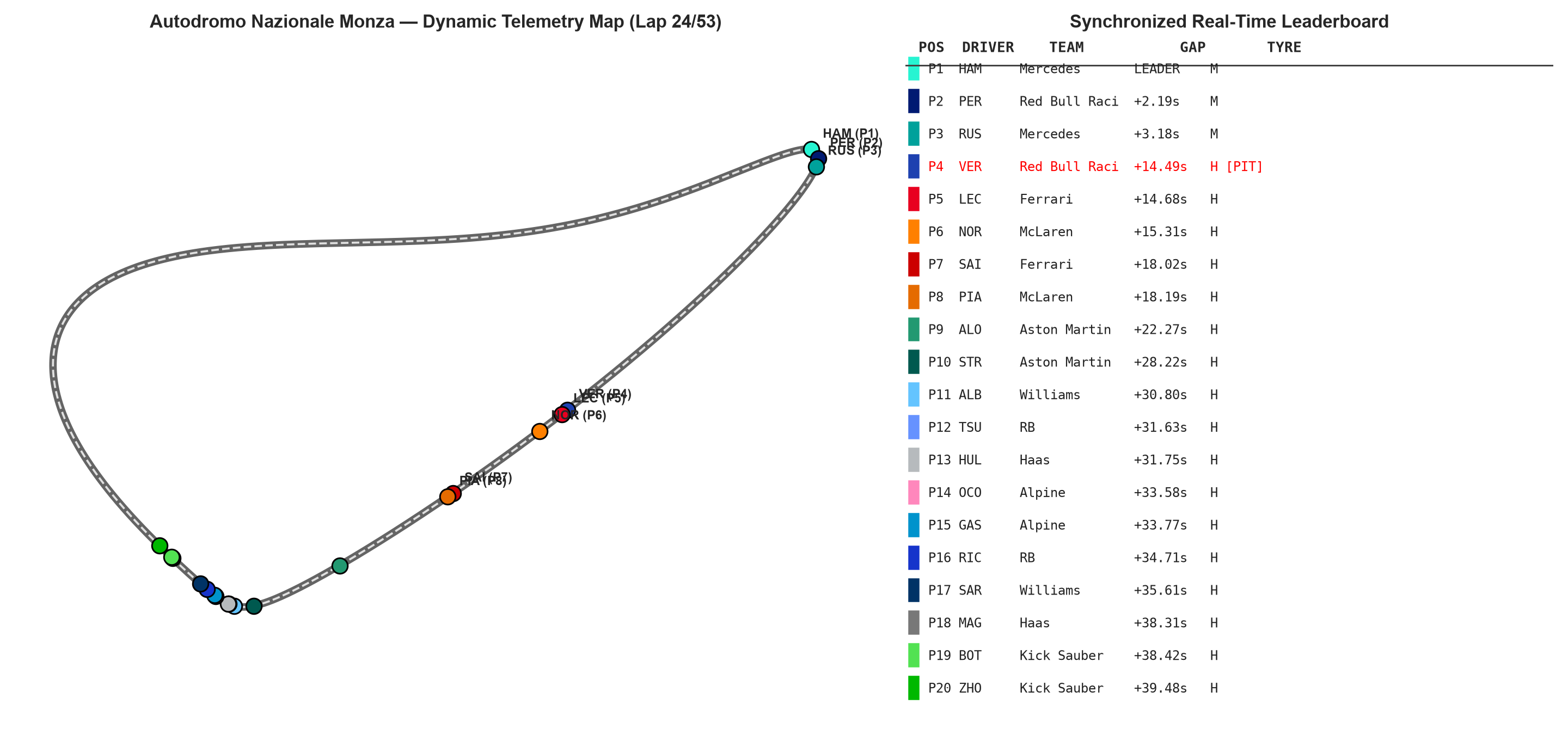
Generating deterministic telemetry across 53 laps at Monza; fuel burn vs. tyre degradation curves.
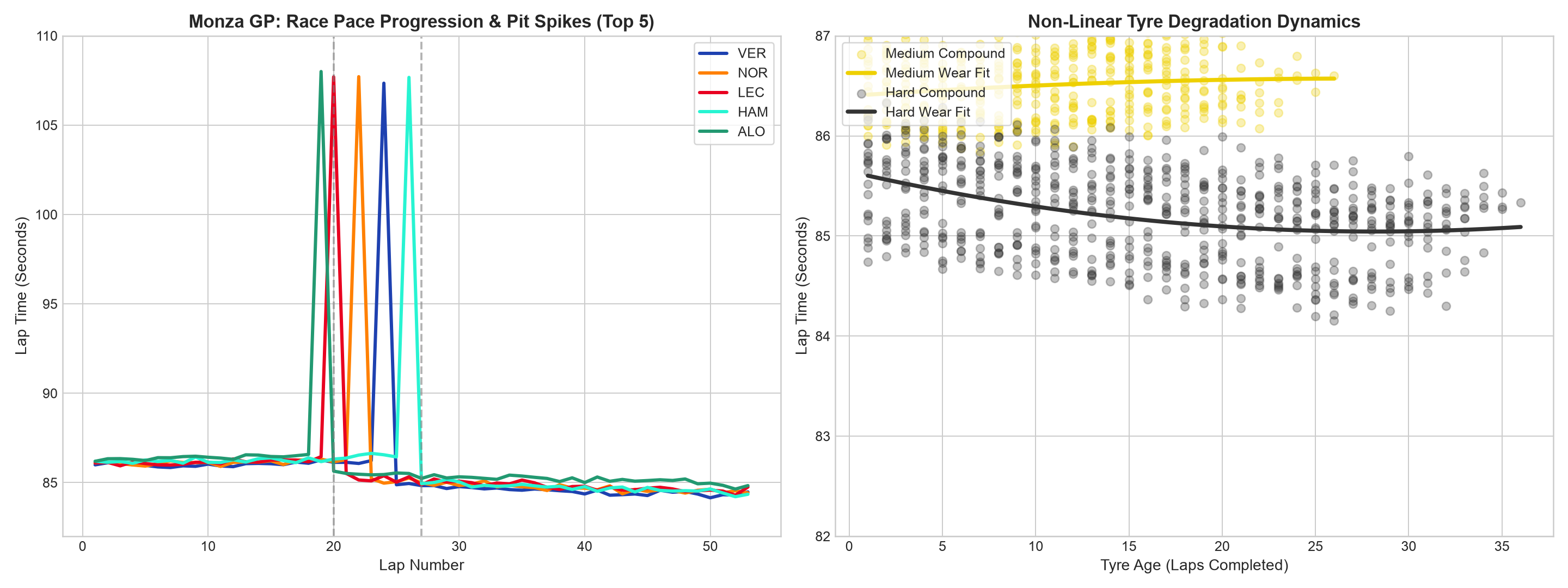
Lab 2: Dynamic Animation
Dual-panel 2D circuit tracking + continuous sub-second cornering and braking dynamics.
Lab 3: What-If ML
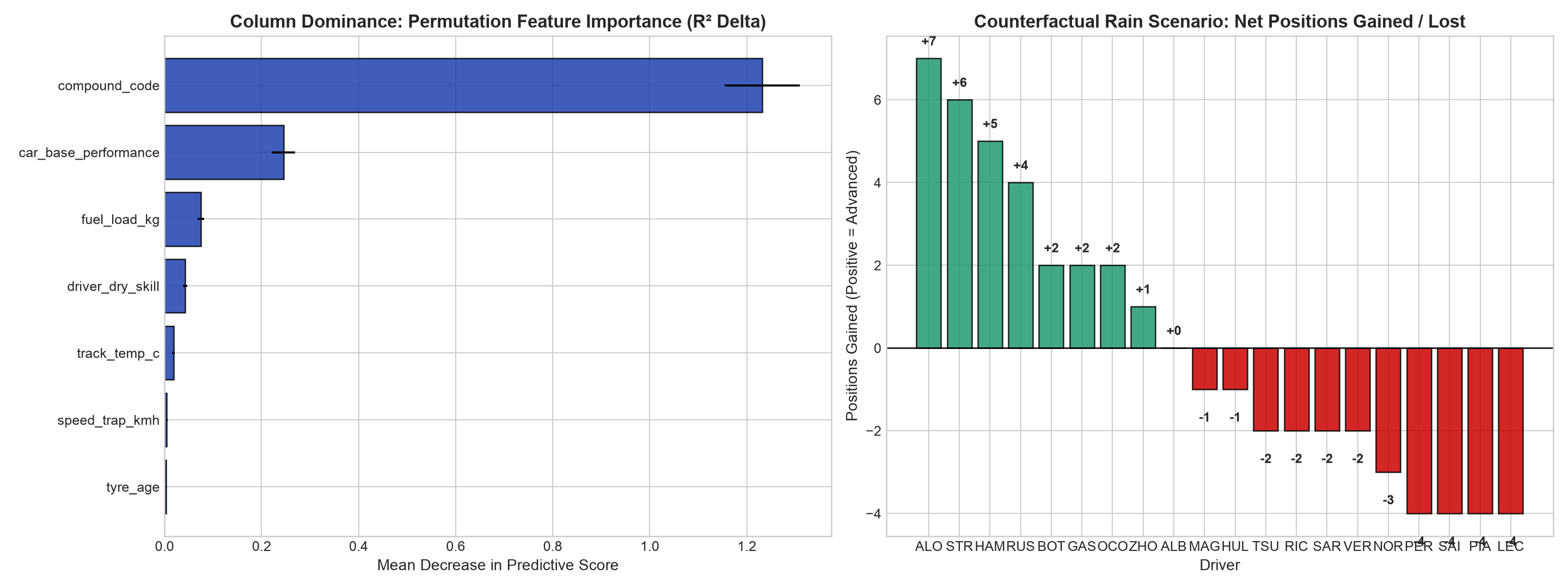
Permutation column dominance & counterfactual rain simulation: *"Who would have won in the wet?"*
Counterfactual Reasoning: "What If?"
Passive reporting tells you what happened. Predictive data science asks why it happened and simulates what would happen under alternate realities.
Monza Dry Race
Max Verstappen (Red Bull) wins due to straight-line aerodynamic efficiency and low drag.
Monza Wet Counterfactual
Aero advantages compress; Lewis Hamilton (Mercedes) and Fernando Alonso (Aston Martin) surge to the podium.
Invest in Yourself First
"Master the basic questions, the scientific methodology, and the human story behind the numbers. The tools will take care of themselves."
github.com/erolrecep/datascience_from_yesterday_to_tomorrow
Press Space or → to navigate · F for fullscreen · O for overview